
Most businesses approach growth like a trip to the casino. They throw money at ads, cross their fingers, and hope enough sales come in on the back end to cover what they spent to get attention in the first place. Some months it works. Other months it doesn’t. Either way, it feels like you’re always one bad week away from panic.
That’s not marketing. That’s gambling with better graphics.
The hard part is how exhausting it gets. When ads get more expensive, you either spend more to stay visible or you stop spending and watch your pipeline dry up. You end up stuck in a loop where “more budget” feels like the only solution.
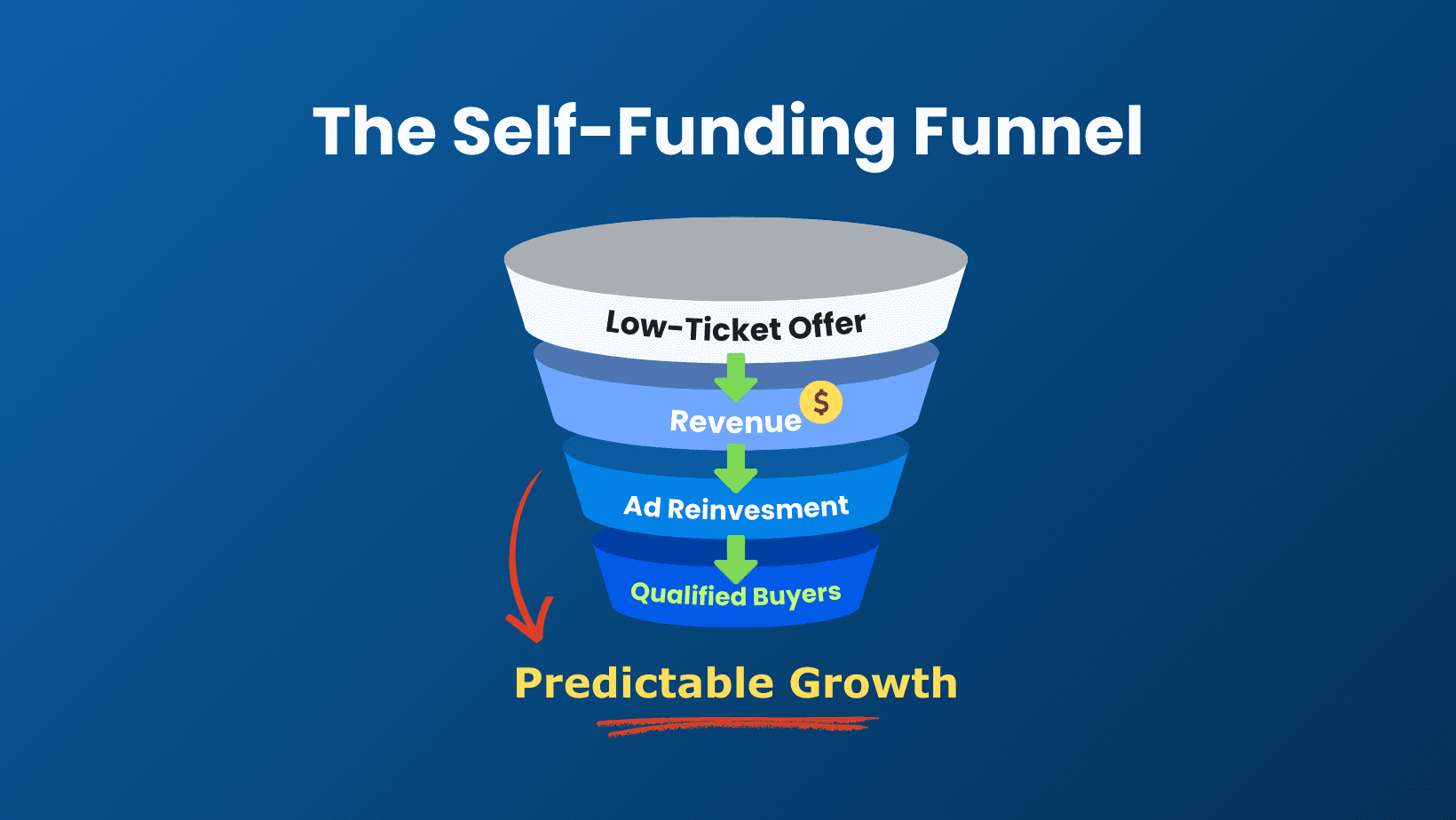
A self-funding funnel flips that whole model. Instead of paying to “maybe” get a lead, you build a system where your first offer generates the cash to fund the traffic that brings in the next buyer. Done right, a self-funding funnel doesn’t just reduce costs. It changes the quality of the people you attract, because buyers behave differently than freebie hunters.
A self-funding funnel turns your first offer into a filter and a funding source, so you stop paying for flaky leads. You’ll attract buyers first, then convert them into high-ticket clients with cleaner calls and higher show-up rates.
The Problem: The “Ghost” on Your Calendar
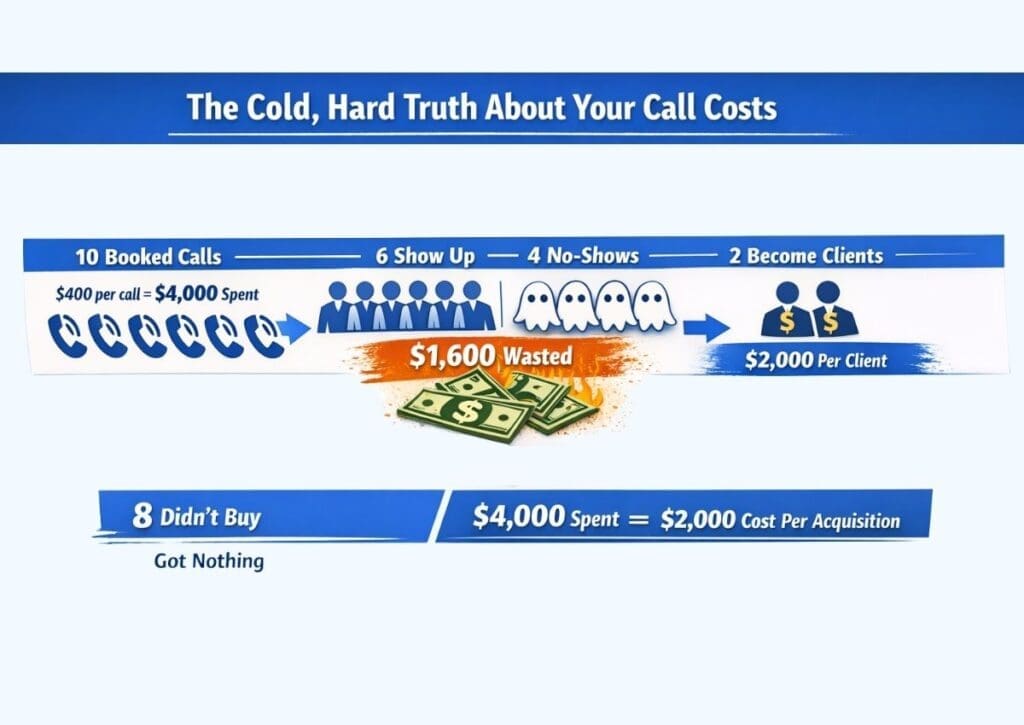
If you run a service business or a coaching program, you’ve probably felt the math get uglier lately. What used to be a reasonable cost to get someone to raise their hand now feels like a punch in the gut. It’s not uncommon to spend $400 just to get one person to book time on your calendar.
And that’s only the visible cost.
The real problem is the “ghost” that shows up after you pay for the booking. The no-shows. The people who booked because they were curious, bored, or just wanted to “pick your brain.” The ones who aren’t actually ready to buy, don’t have budget, or don’t even fit what you do.
Once you add up the no-shows and the unqualified leads, you’re often spending thousands of dollars just to have one real sales conversation with a qualified person. You’re not paying for opportunities. You’re paying for a messy list of maybes.
That’s why so many business owners feel like they’re working harder every month just to stay in the same place. The ad platforms keep raising the price of attention, and your calendar keeps filling up with people who don’t convert.
If that sounds familiar, the fix usually isn’t “better ads.” It’s changing the first step. Because when your first step is “Book a Call,” you’re asking strangers for time before they’ve given you trust.
Fundamental 1: The Entry-Level Entryway
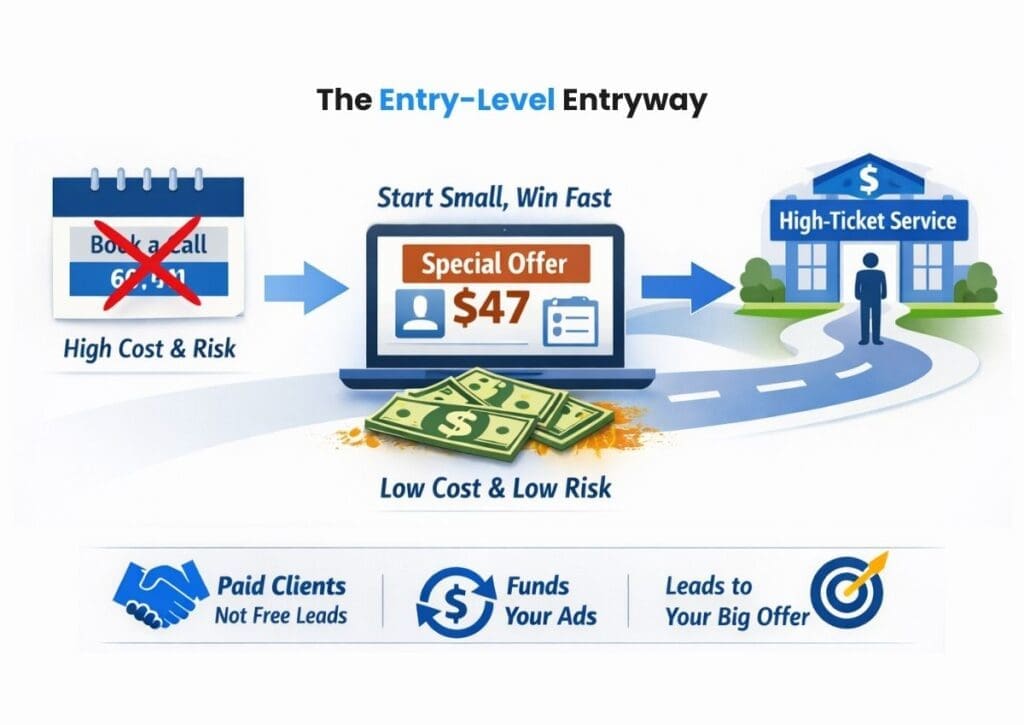
The first big shift is simple, but it changes everything: stop asking people for their time before they’ve given you their trust.
In most funnels, the very first call-to-action is “Book a Call.” That sounds normal… until you realize what you’re actually doing. You’re asking a stranger to commit 30–60 minutes with you before they’ve experienced any real value. So you get a calendar full of people who are curious, cautious, or simply not serious.
Instead, you lead with a small, helpful tool or training priced between $20 and $100.
This isn’t about making a profit on the $20. It’s about identification.
When someone pulls out their wallet to solve a specific problem, their relationship with you changes instantly. They stop acting like a “lead” shopping for free tips and start acting like a customer who’s made a commitment. Even a small purchase creates momentum, and momentum creates better clients.
Here’s what that entry-level entryway needs to do (without overcomplicating it):
- It solves one specific problem fast
- It feels easy to say yes to (low risk, high clarity)
- It leads naturally to the bigger problem your high-ticket offer solves
Now the part that makes this a self-funding funnel.
If that small offer is structured correctly, the revenue from it goes right back into your ad spend. So instead of paying out of pocket to get a lead, your new customers are covering the cost of bringing in the next wave of customers.
That’s how you acquire high-ticket clients for $0 on the front end:
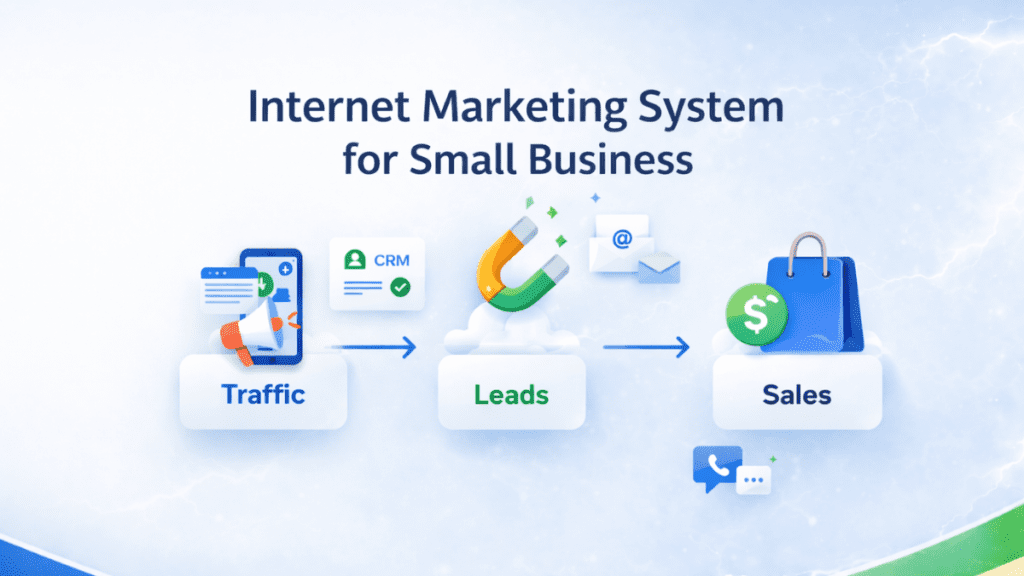
- Ads bring people to the small offer
- The small offer pays for the ads
- The buyers become the warmest pool for your high-ticket service
It’s not magic. It’s math paired with a better first step.
Fundamental 2: The “Sample” that Sells the Solution
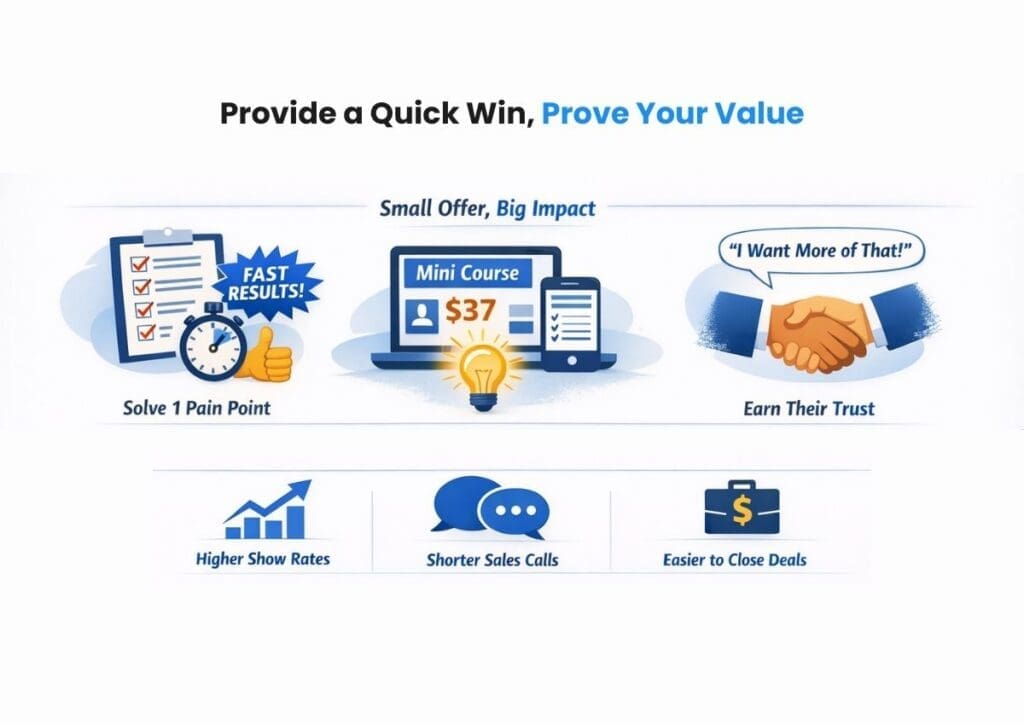
Think of your entry-level product like a sample at a grocery store. Nobody needs a 45-minute consultation to decide if they like a new snack. They just need a quick taste that proves, “Yep, this works for me.”
That’s exactly how your small offer should function inside a self-funding funnel.
It should solve one small, immediate headache for your customer. Not their entire life. Not the full transformation. Just one painful problem that’s been slowing them down or stressing them out.
By the time they finish using it, they should walk away with two things:
- A small win they can feel right away
- A clear understanding that you know what you’re talking about
That combination is powerful because it changes the psychology of the next step.
When someone books a call after getting a win from your small offer, they’re not showing up to “check you out.” They’re showing up to ask, “How do I get more of this?” The conversation shifts from proving yourself to mapping the path forward.
This is where you’ll notice the funnel paying you back in ways that aren’t just financial:
- Show rates go up because buyers take themselves seriously
- Calls get shorter and cleaner because the context is already set
- You spend less time convincing and more time diagnosing
- Closing becomes smoother because trust isn’t theoretical anymore
In the old model, your calendar fills with strangers. In this model, your calendar fills with people who already believe you can help them.
Fundamental 3: Building a Business You Actually Own
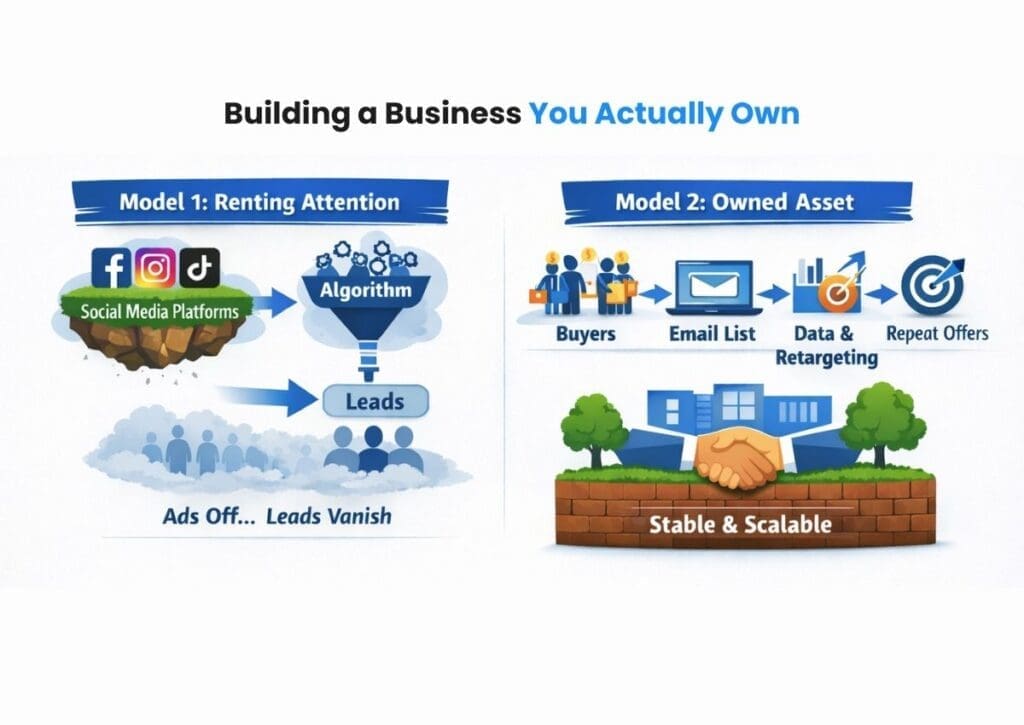
In the old model, your marketing is basically a rental.
You pay for ads, you get leads. You stop paying for ads, the leads stop. Instantly. It’s like turning off a faucet. And even if you were getting decent results, you’re still dependent on platforms, pricing swings, and whatever changes happen next.
A self-funding funnel changes what you’re building.
Instead of spending money to collect a pile of strangers, you’re building a database of proven buyers. People who didn’t just click… they committed. That one action alone (buying something) tells you more than any “lead magnet” ever will.
And here’s the part most people miss: even the customers who don’t hire you for your main service right away are still valuable. They’re in your ecosystem. They’ve raised their hand with a purchase. You can follow up, educate, invite them to the next step, and do it without begging an algorithm for reach.
This is the real asset:
- You own the list
- You own the customer data
- You own the relationship
- You control the follow-up and the next offer
So you’re no longer “renting” attention from social platforms and hoping it works out. You’re building a predictable system you can improve over time, because the inputs and outputs are trackable.
That’s what makes this model feel professional. It isn’t just a clever funnel trick. It’s a structural shift toward stability.
Is Your Business Ready to Flip the Script?
This isn’t a “get rich quick” tactic. It’s a structural change in how you find clients.
The reason it works is simple: it stops you from trying to sell high-ticket offers to people who haven’t earned the right to take up your time yet. Instead, you create a clean path where people prove they’re serious by buying a small, focused solution first. That one shift improves your lead quality, your show rates, and the entire tone of your sales process.
This model works best if:
- You already have a high-value service that people love
- You’re tired of the rising cost of traditional lead generation
- You want a more professional, automated way to introduce people to your work
And if you’re reading this thinking, “Okay, but can it really be close to $0?” — the answer is yes, if your entry offer is priced and positioned correctly, and it actually delivers a fast, specific win. The goal isn’t to become a low-ticket business. The goal is to let the first offer fund the engine that feeds the second.
So here’s the real question.
What would it do for your stress levels if your marketing budget was effectively zero because your new customers were footing the bill for your ads?That is the power of a self-funding system.